
Changing Image of Shinran Shonin

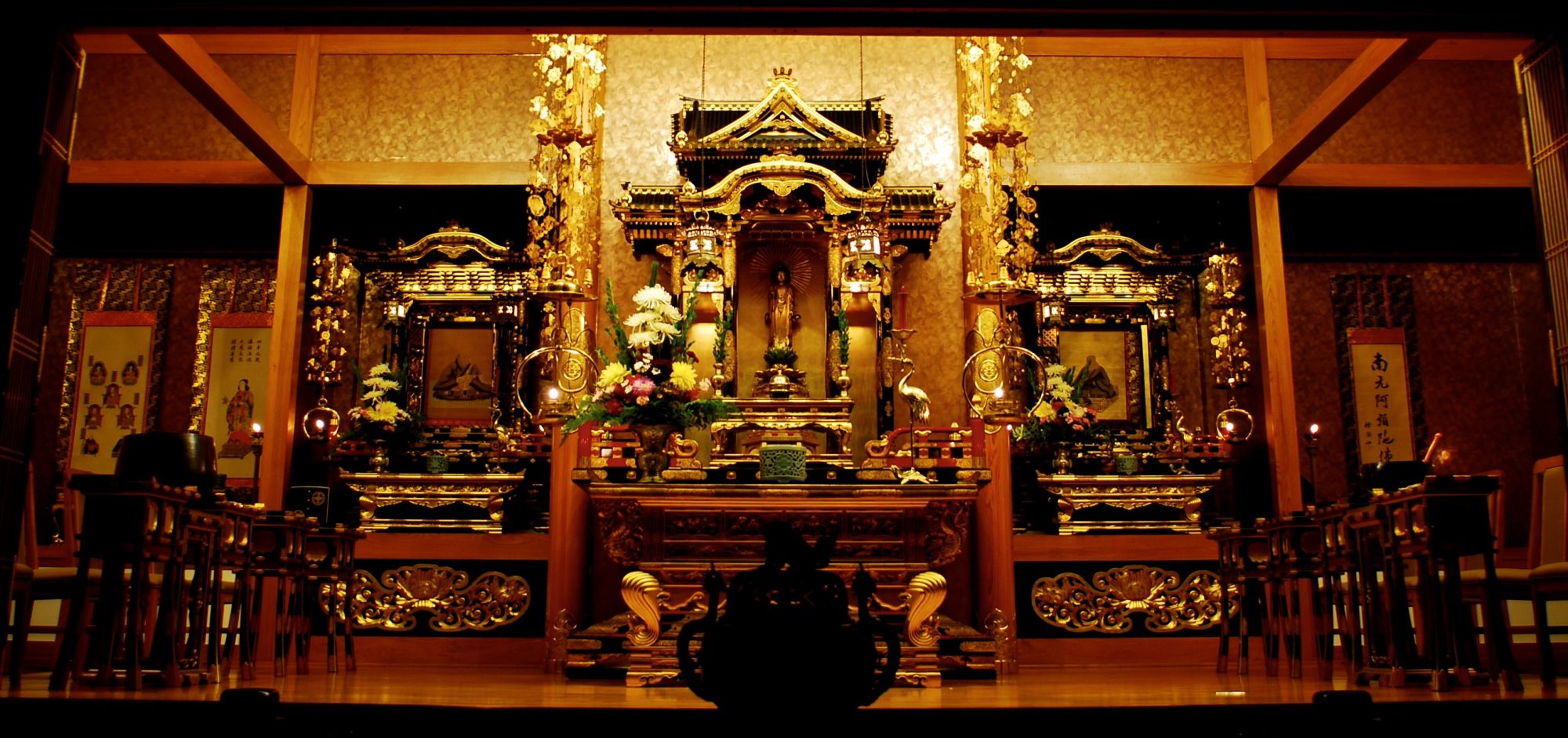
Founder’s Hall, Higashi Honganji, Kyoto

By Rev. Ken Yamada

Visitors to Higashi Honganji’s mother temple in Kyoto must be surprised to find on its main altar—not the Buddha—but rather, a statue of Shinran Shonin. Even I was surprised when I first saw it.

The largest hall at the denomination’s headquarters is dedicated to Jōdo Shinshū’s founder, which makes sense. Nonetheless, over the centuries the image of Shinran (1173-1263) played an outsized role in the transmission and understanding of Shinshū teachings. In turn, the way people viewed him changed over time. Continue reading “Changing Image of Shinran Shonin”

Myōkōnin Dōshū

Rev. Nakura (right) and Rev. Gary Link (left) visiting Dōshū’s temple Gyotoku-ji in Akao.

By Rev. Miki Nakura

Although a commoner from Japan’s countryside, Dōshū’s remarkable faith caught the attention of Rennyo Shōnin, Jodo Shinshu’s “second founder.”

Most men wish always to have something new and novel; but a person of faith feels everything is fresh and new, even if constantly repeated. Regardless of how many times, each is heard anew with open ears,” Rennyo said. “Although Dōshū listened to the teachings constantly, he listened as if hearing them for the first time and he was grateful.

Dōshū (道宗)—a myōkōnin (simple person of deep faith in Jōdo Shinshū)—was born with the name Yashichi in Gokayama’s Akao village, deep in mountainous Toyama Prefecture, near the Japan Sea. He passed away in 1516. Today, Gokayama is designated as a World Heritage Site, known for its “gassho (prayer hands) style” thatched roof homes. The region is covered in snow during winter. Continue reading “Myōkōnin Dōshū”

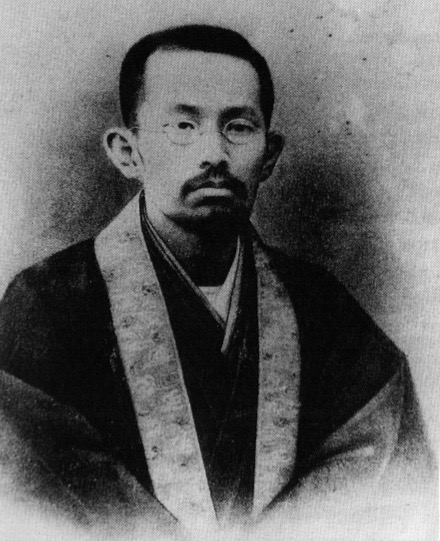
Kiyozawa: From Philosophy to Awakening

By Rev. Ken Yamada

Spiritual awakening takes various routes, depending on the person. Swift and direct, or twisting and turning. Two of Jodo Shinshu’s most important teachers in modern times took such opposite routes.

Daisetz Teitarō Suzuki (1870-1966), absorbed in Zen practice, experienced a profound realization early in life. By contrast, Kiyozawa Manshi (1863-1903) struggled for years, delving deep into philosophy before awakening to spiritual truth. Continue reading “Kiyozawa: From Philosophy to Awakening”

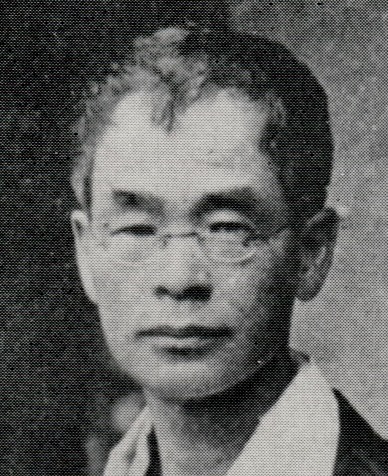
D.T. Suzuki: From Awakening to Philosophy

Daisetz Suzuki

By Rev. Ken Yamada

Two of the most influential Buddhist thinkers in modern times led vastly different lives. Daisetz Teitarō Suzuki gained world-renown as a Zen expert, traveled widely, and lived to a ripe old age. Manshi Kiyozawa failed to reform institutional Jōdo Shinshū, died relatively young and unknown outside Japan. Yet, they have much in-common. Both clarified and explained Jōdo Shinshū in modern terms, albeit from different perspectives. Continue reading “D.T. Suzuki: From Awakening to Philosophy”