
By Julien Le Coz
Since becoming Buddhist 15 years ago, I dreamed of visiting Japan. In my home country France, Rev. Miki Nakura conducted my kikyoshiki Buddhist name ceremony, then last Fall, we finally met in Kyoto.
My wife and I flew from Paris to Tokyo, where we promptly visited Vowz bar, started by Nishi Hongwanji Jōdo Shinshū ministers, including Rev. Yoshinobu Fujioka. Bridging a growing distance between people and Buddhism, they created this relaxing place with altar, calligraphy, and Buddhist statues, where patrons can order cocktails, and if interested, hear about Buddhism. The purpose isn’t proselytizing, just making Buddha dharma accessible.
After identifying myself as Jōdo Shinshū, we were invited to participate with other bar patrons in a short ceremony, chanting from photocopies of Sanseigei. The atmosphere was casual and friendly. When we departed, we were given Shinshū song booklets. Here I felt were true disciples of the Buddha, albeit unorthodox.

In Kyōto, Rev. Nakura escorted us to our lodgings at Tonami Tsumesho Inn, which is nearby Higashi Honganji mother temple. Started as a dormitory for temple construction workers and now used by visitors, it’s been rebuilt several times over its long history. The landlady, Ashihara-san, an ordained minister, warmly welcomed us to the traditional Japanese-style inn with tatami mats and futons on the floor.
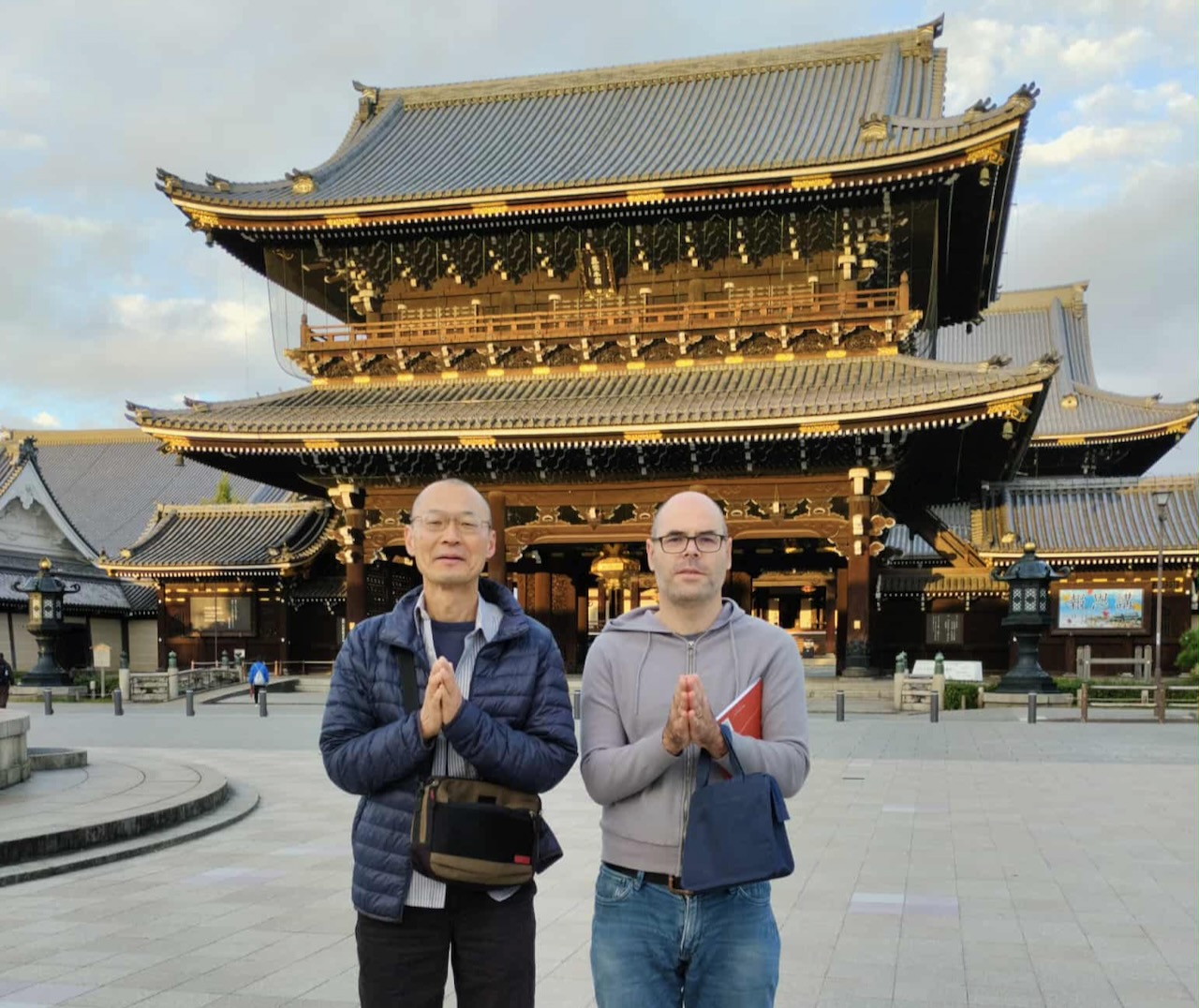
We awoke early and walked to the mother temple. Passing under the monumental front gate, we faced two majestic buildings—Founder’s Hall and Amida Hall. The buildings emanated elegance and refinement. They don’t rise up like Western cathedrals; they’re more sober and humble in height, but expansive with their large tiled roofs.
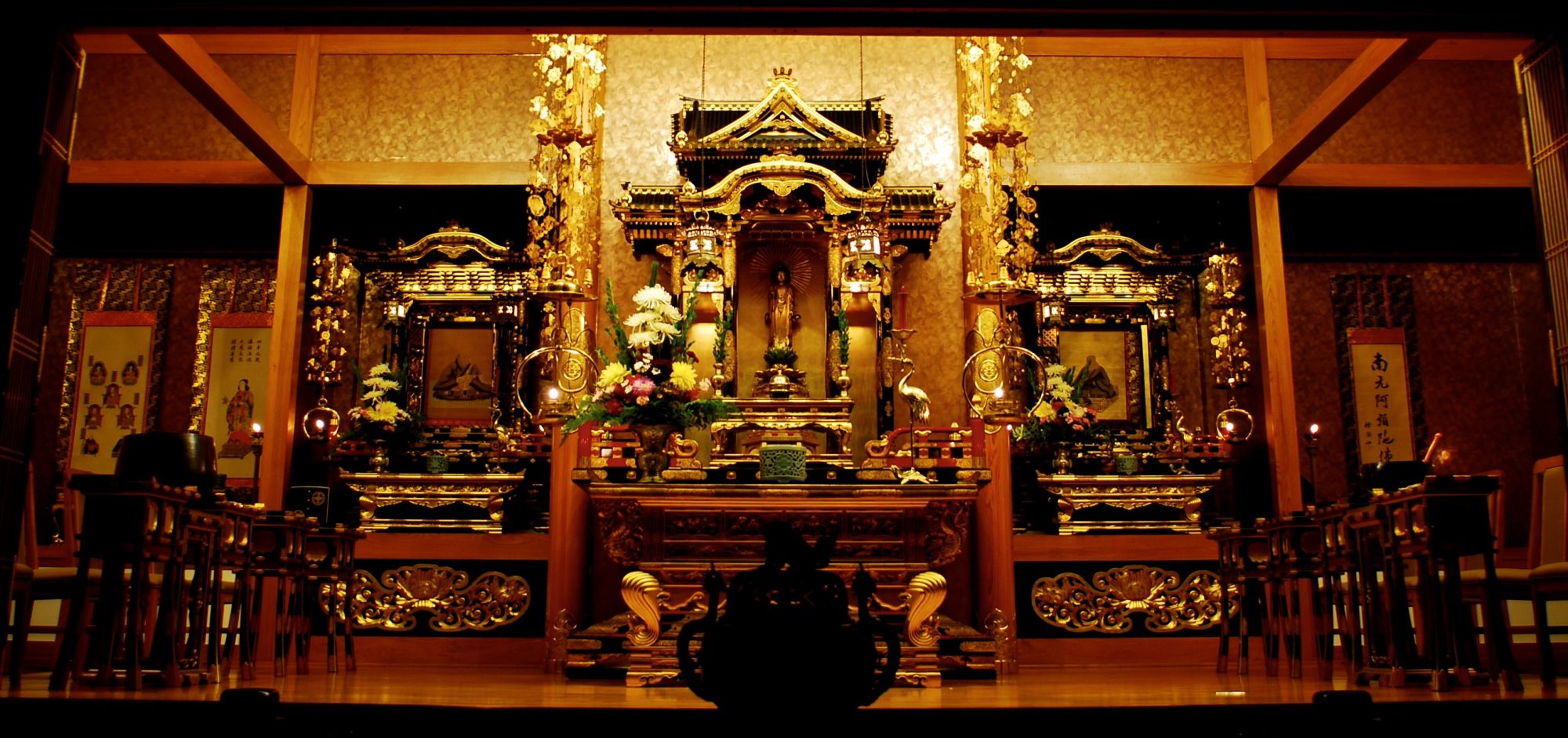
The 7 a.m. morning service began in Amida Hall, where a beautiful wooden Amida statue is enshrined, surrounded by gilding, candles, and flowers. The priests chanted quickly, and within minutes, we moved to the larger Founder’s Hall via a wooden walkway.
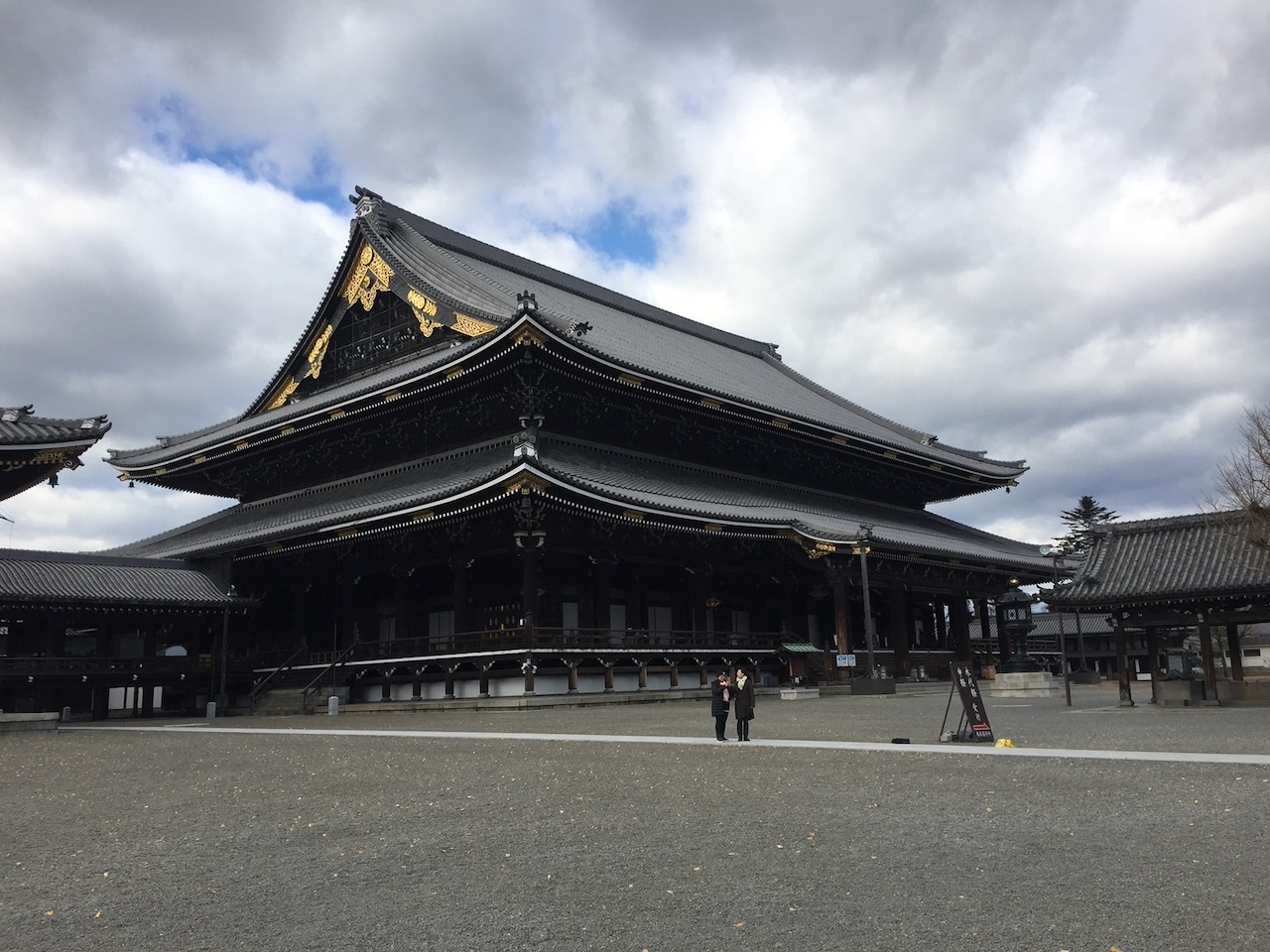
Founder’s Hall is dedicated to Jōdo Shinshū founder Shinran Shōnin. Chanting included Shōshinge, nenbutsu (“Namu Amida Butsu”) and wasans (Shinran’s hymns). I could chant alongside other attendees, thanks to Rev. Gregory Thomas’s help back in France, especially Nenbutsu, which is sung like a refrain. A letter by Rennyo Shōnin (Shinshu’s second founder) was read, then a speaker gave a touching dharma talk about a child’s death, which Rev. Nakura translated for us. The atmosphere radiated kindness and benevolence.
We began touring Kyoto’s famous sites by visiting Kinkaku-ji, the Golden Pavilion, a beautiful but touristy Zen temple; Ginkaku-ji, the Silver Pavilion, with its magnificent garden; Honen-in, where Shinran’s teacher Hōnen lived, and strolling Philosopher’s Walk, named after Nishida Kitarō .
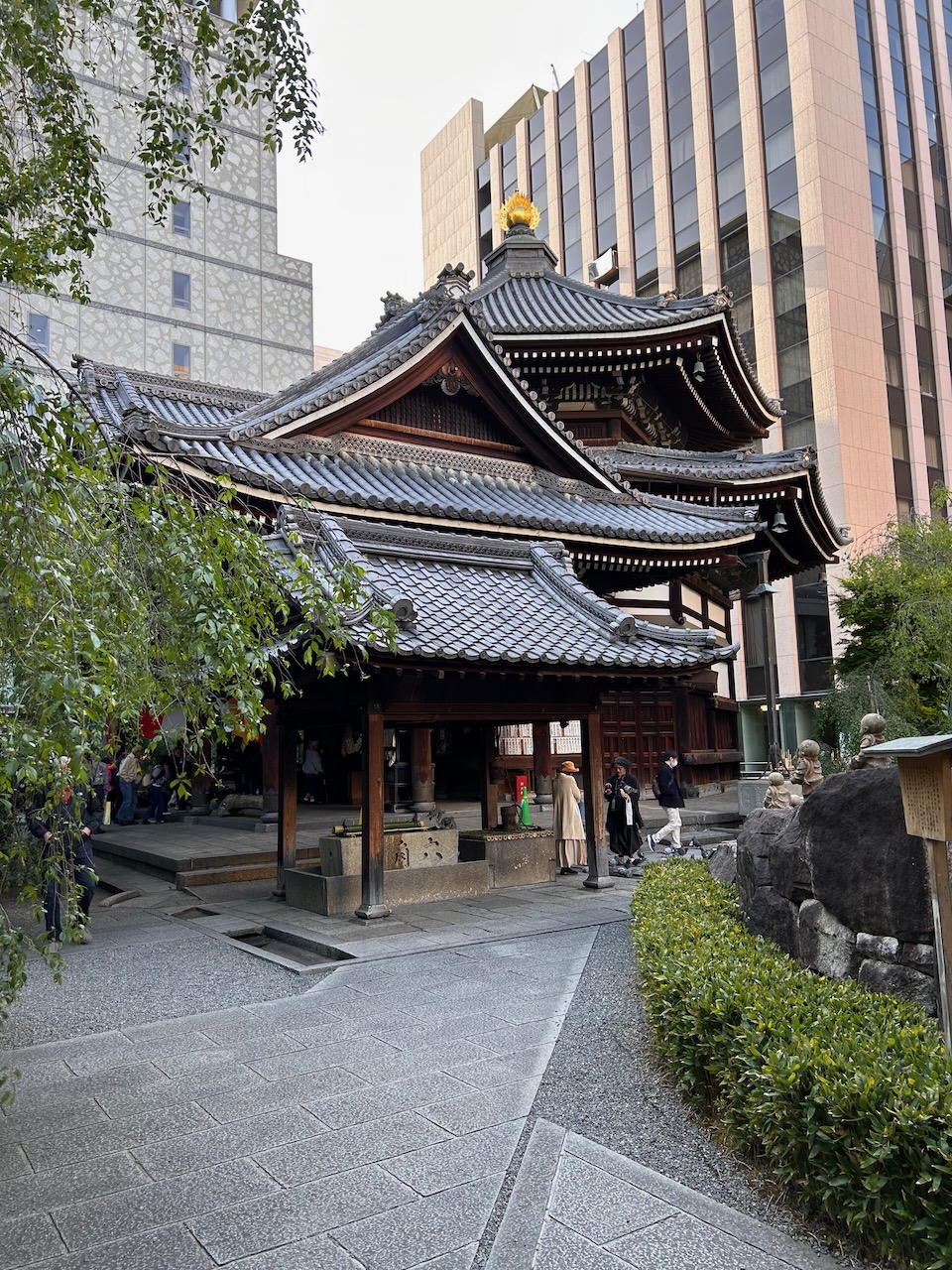
In rain and fading daylight, we visited Rokkakudō, established by Buddhist patriarch Prince Shōtoku and dedicated to bodhisattva Kannon. Here, on the 95th day of a retreat, Shinran dreamed of Kannon, prompting him to first meet Honen. The soft, warm light inside the temple contrasted with the gloomy sky outside.
In the evening we visited the temple of Rev. Nakura’s friends, Mr. and Mrs. Azai, both Jōdo Shinshū ministers, who served us tea and Japanese pastries.
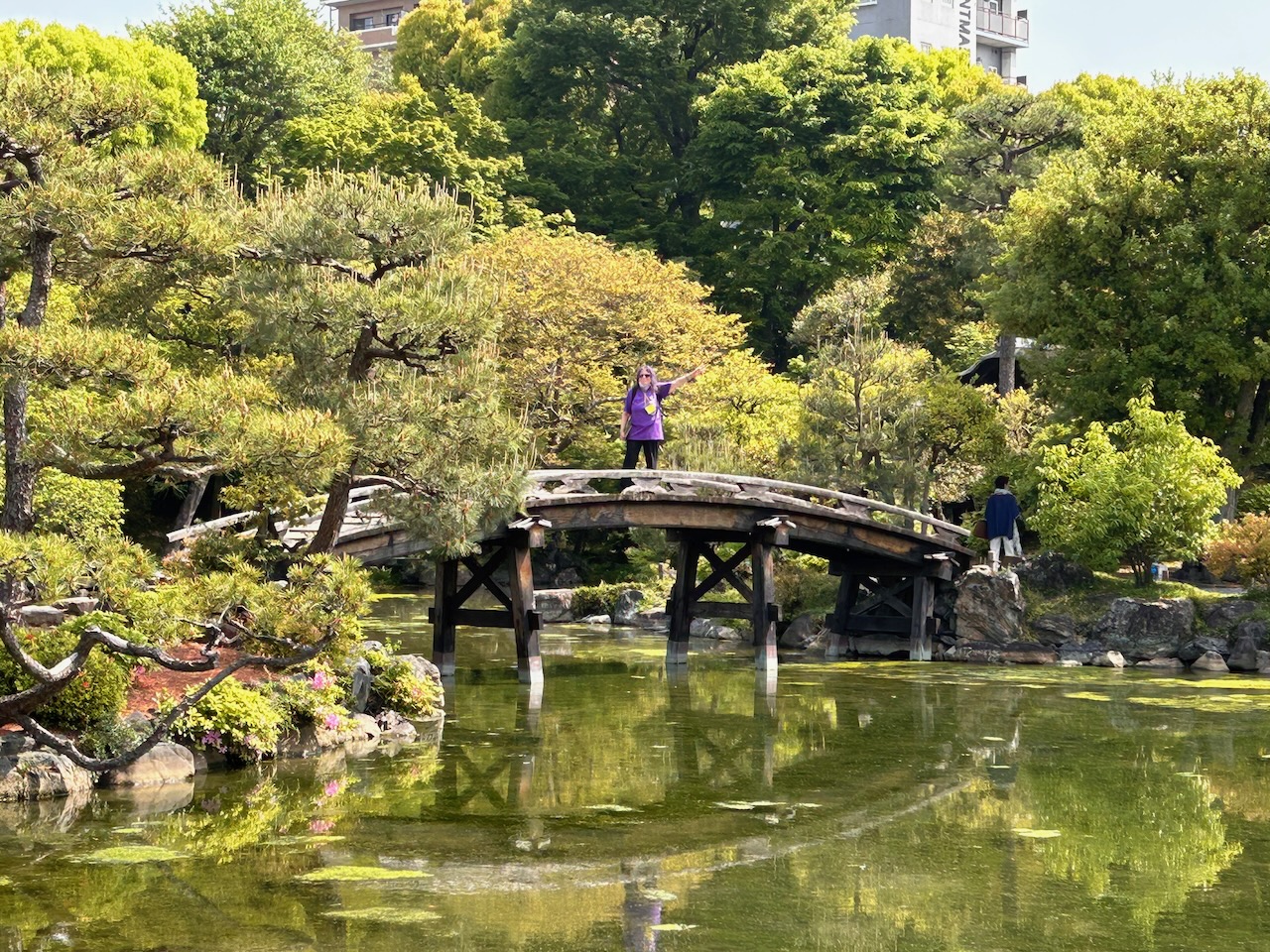
At Higashi Honganji’s Shōsei-en garden, we saw a traditional Japanese garden covering a city block. We visited Sanjūsangen-dō with its multitudes of life-size bodhisattva statues. My wife thought “1,000” was symbolic, but the temple actually houses a thousand statues.
We saw Otagi Nembutsu-ji temple, surrounded by hundreds of cute little stone statues. We paid our respects to a small Kannon statue with presumed healing powers, that is, if you touch it, then touch where your body is ailing. We also saw Yamashina Honganji with its pretty garden.
A funicular took us up Mt. Hiei, where we could see a view of Lake Biwa. At Tendai Buddhism’s mother temple, Enryaku-ji, we couldn’t go inside the main Konpon Chūdō hall, which was under renovation. The area felt like a small sacred village surrounded by trees. We went to see Daikōdō, a hall housing portraits of Shakyamuni Buddha’s disciples and famous Buddhist teachers such as Dōgen, Eisai, and others. Looking at statues of Hōnen and Shinran, they appeared as bodhisattvas, whose compassion helps free us from suffering.

A shuttle took us to Jōgyō-dō hall, where a young Shinran walked in meditation around an Amida statue. We happened to see a priest performing such practice, reciting nenbutsu. In the still atmosphere, the nembutsu chanting felt intense. With respect, we turned towards Shaka-dō temple with its Shakyamuni Buddha statue.

As the day ended, shapes of surrounding mountains stood on the horizon, and mist rose lazily, sublimated by the evening sun. After visiting Mt. Hiei, a place with strong spiritual energy, the landscape shone indescribable beauty.
We stopped at Ōtani Sobyō, Shinran’s mausoleum, We arrived shortly at closing time, and by stroke of luck, Rev. Nakura negotiated a few extra minutes with the guard, allowing us to admire the grounds and building. We also visited other noteworthy Shinshū sites—Anyōji temple, where Hōnen and Shinran spent time, Chion-in (Jōdo-shū’s mother temple), and Shōren-in, where 9-year-old Shinran was ordained.

Aisha-san from our inn was kind enough to organize an evening meal with six Higashi Honganji people, including Ōtani University professor Michael Conway. They were curious about my spiritual journey and listened with interest and patience.
In Nara, the ancient capital, we saw Hōryūji temple with its 14-centuries-old pagoda. Such pagodas were built with a central pillar supporting the entire structure on a stone foundation, which acts as an earthquake shock absorber. Rev. Nakura drew a parallel with seiza (sitting meditation) in keeping one’s spine straight, which cultivates spiritual strength. Also at Hōryuji was a treasure gallery with statues of Jizō, Kannon, Shōtoku Taishi and others.

At Tōdaiji temple, we saw the famous Great Buddha statue. This Vairocana Buddha bronze statue stands 15 meters tall, surrounded by smaller Buddha statues including terrifying looking celestial kings. Outside the temple at the south gate stood two large guardian statues.

Before leaving Kyoto, I wanted one last time to attend Higashi Honganji morning service. Before it ended, I tried quietly to leave but found the door closed with a security guard standing nearby. I asked in English if I could go; the guard replied cheerfully, “You’re free to leave whenever you want, and you’re also free to come back whenever you want.” I felt that meant we’re free to turn away from the Buddha, but we’re always welcome back if we change our minds, because the Buddha never rejects anyone. I didn’t expect such kindness in such few words.
I couldn’t return home without visiting nearby Nishi Hongwanji, mother temple of the Jōdo Shinshū Hongwanji-ha denomination, a smaller structure but quite similar. It also has a Founder’s Hall and Amida Hall connected by a wooden walkway. However at Higashi Honganji, the Amida hall is on the southside, and at Nishi Hongwanji on the northside. They both welcome Amida Buddha into our lives.
In Japan, the sangha truly welcomed us. Meeting this community, consisting of lovely people sincerely committed to the Buddhist path, was most powerful. I have no idea how to repay them for their warmth. Thank you Rev. Nakura from the bottom of my heart for allowing us to have such wonderful encounters. I’m grateful for my connection to Higashi Honganji.
-Mr. Le Coz lives in France.