
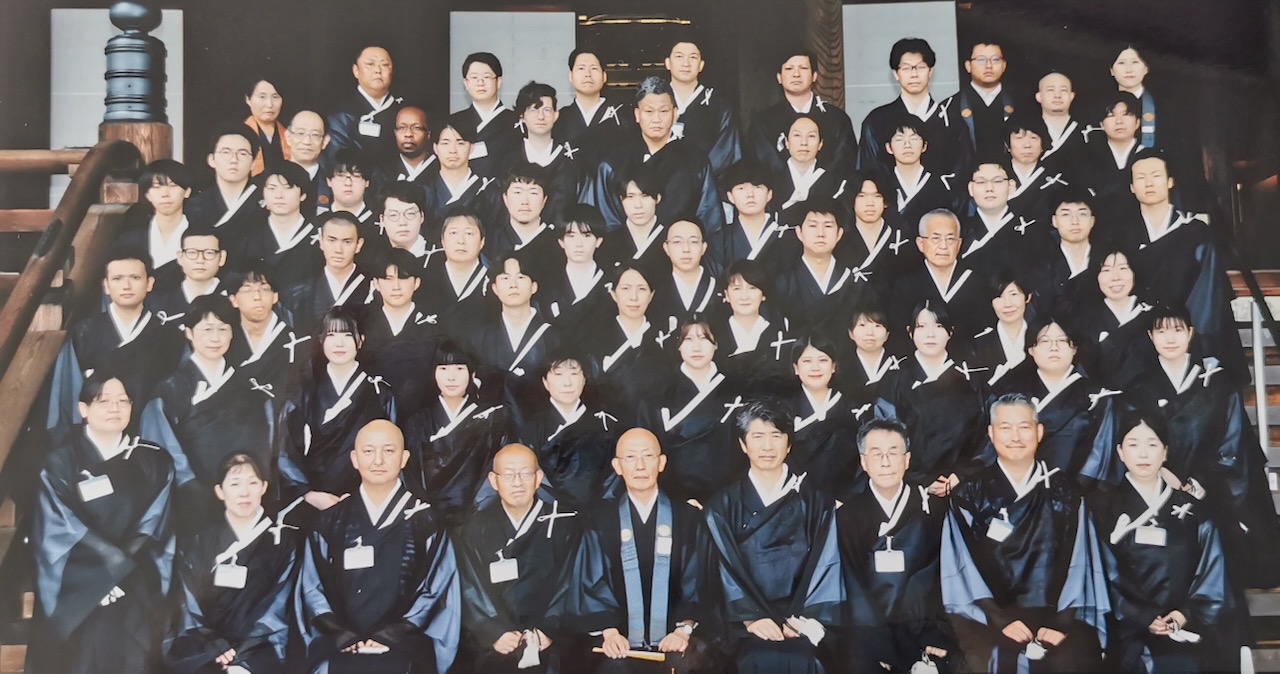
Arriving at Higashi Honganji mother temple in Kyoto for shūren (ministers retreat), I had only a rough idea of what awaited. After receiving initial tokudō ordination, I needed training for full kyōshi ordination, which would enable me to work as a temple minister. But nothing—absolutely nothing—prepared me for the intensity, discipline, and emotional weight of this monastic-like experience.
It wasn’t quiet meditation, peaceful strolls in nature, and reflective periods of reading sutras, rather relentless activity that was physically and mentally demanding, highly structured, and ultimately deeply transformative for me. By week’s end, I learned more about myself than years of academic study could ever teach.
The session last September consisted of forty participants, more than usual, because in Fall college students in their twenties participate, preparing to serve at their family temples. Among exceptions were myself (French convert) and Victor (American convert). We became the “international team,” immersed in the Japanese rhythm of temple life.
Immediately, instructors confiscated our cell phones. This disconnection from digital life felt surprisingly liberating. Consequently, we could focus without interference from the outside world.
The retreat was conducted entirely in Japanese. Fortunately, Rev. Tomoyuki Hasegawa and Rev. Ryōko Osa flew from the United States to translate for us. Their presence was nothing short of a blessing. Their real-time translations into English allowed us, not only to understand the teachings, but helped us fully participate. Hasegawa-sensei amazingly translated into English several-minute-long monologues. And thanks to our group’s advisor Rev. Kadoi, we felt welcomed and included in group discussions. Married to an American woman, he spoke excellent English.
There was a kind of “five minute rule”—technically we needed to arrive five minutes early for any activity. That really meant ten minutes early. All meals, services, classes, discussions, cleaning duties, were preceded by mandatory meeting time. Arriving five minutes early meant being late. This constant anticipation created a strange form of mindfulness—not living in the present, but ten minutes ahead.
Each day promptly began at 6:00 a.m. when our room lights switched on. Within 30 minutes, we folded our futon mattresses, cleaned our shared rooms, taken care of personal hygiene, and dressed in multiple layers of robes. The challenging morning rush set the day’s tone in which every moment was filled.
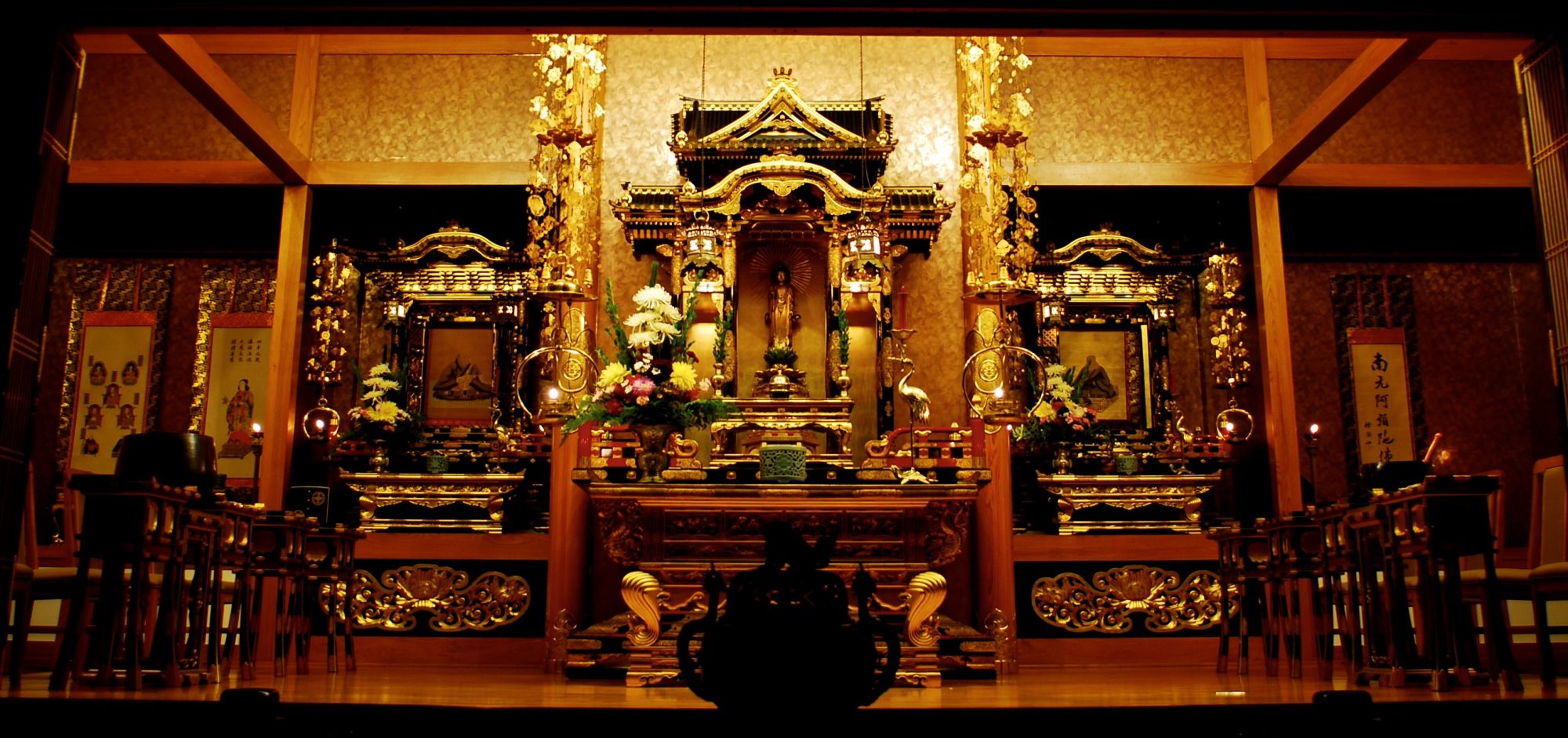
Preparing for morning service, we reviewed wasans (Shinran’s hymns) to be chanted. At 7:00 a.m., we crossed a wooden walkway connecting the retreat center to Higashi Honganji’s magnificent temples, where in Amida Hall, we listened to rapid recitation of Amida Sutra by temple ministers. Their chanting was fast and electrifying.
Moving to the adjacent Founder’s Hall, where a Shinran statue is enshrined on the main altar, we chanted Shōshin-ge and the day’s selection of wasan. Hearing all the voices chanting in unison inside a sacred hall of our tradition was moving and filled me with deep gratitude.
Breakfast in the dining hall was simple, fast-paced, and efficient. Victor and I gratefully ate vegan meals specially prepared for us. Our toban work groups helped with meal chores, setting up, serving, and cleaning. Everyone worked together with astonishing efficiency.
Every morning was a one-hour lecture. While Rev. Hasegawa translated for us, Japanese participants wrote down what the teacher said, and afterwards, compared notes for accuracy. Victor, Rev. Osa, Rev. Hasegawa and I reviewed lectures and discussions, which became a cherished time and helped me clarify and appreciate terms such as zenchishiki (善知識 “good friend of the dharma”), gegaku (解学 “academic study”), and gyōgaku (行学 “practice”).
Afternoons were for chanting (shōmyō), learning how to wear and care for Buddhist robes, and practicing ceremony and temple etiquette. Takahashi-sensei demonstrated proper breathing, posture, and even walking in a way expressing dignity and humility. Our group spontaneously applauded after he quickly transformed a young participant’s stance and confidence, which showed how transmission of knowledge can be deeply personal.
I actually cherished cleaning duties. Wearing samu-e (traditional work clothing), we cleaned and polished temple wooden floors with small cloths. At first—inspired by scenes from anime—I tried scrubbing the floor by running on all fours. Five minutes later, 37°C heat and 70% humidity defeated me. Forced to clean much more slowly, it consciously became a time of humble service and way to connect to the temple.
Late afternoons were dedicated to group discussions. We explored lecture themes, and heard stories about personal motivation, doubts, and various life experiences. These conversations revealed a striking contrast between participants that included temple heirs and converts by choice. Our shared dedication bridged cultural differences.
During evening service, our forty voices chanted Shōshin-ge in a tatami-filled hall with a beautiful scroll of Amida Buddha,. The sound was powerful, resonant, and almost overwhelming. We took turns as chanting leader, an intimidating honor. I was nervous, but the group’s energy lifted me. Afterwards, Takahashi-sensei provided guidance how to improve.
We took turns each day giving a three-minute “personal reflections” talk. I expressed gratitude to teachers and fellow participants for their kindness and support, especially as I struggled. Afterwards, I saw the strictest sensei—famous for scolding us when we were late—wipe away tears.
Our evening dip in a communal Japanese-style bath was not just practical, it helped us form friendships. Relaxing in hot water, we talked freely, shared stories, laughed, and encouraged each other. I’d postponed getting a new tattoo to ensure I could enter the bath. It wasn’t because tattoos were banned (I already had plenty), rather, it would need time to heal. Some of my deepest bonds were formed during bath time.
The sixth night, exhausted after six days of minimal sleep, we had two hours to write a 500-word essay on becoming seekers of the Buddhist path. Putting thoughts into words was challenging. After finishing at 10 p.m., Hasegawa-sensei translated it into Japanese. Retreat staffers apparently stayed awake until 4 a.m. reading the essays.
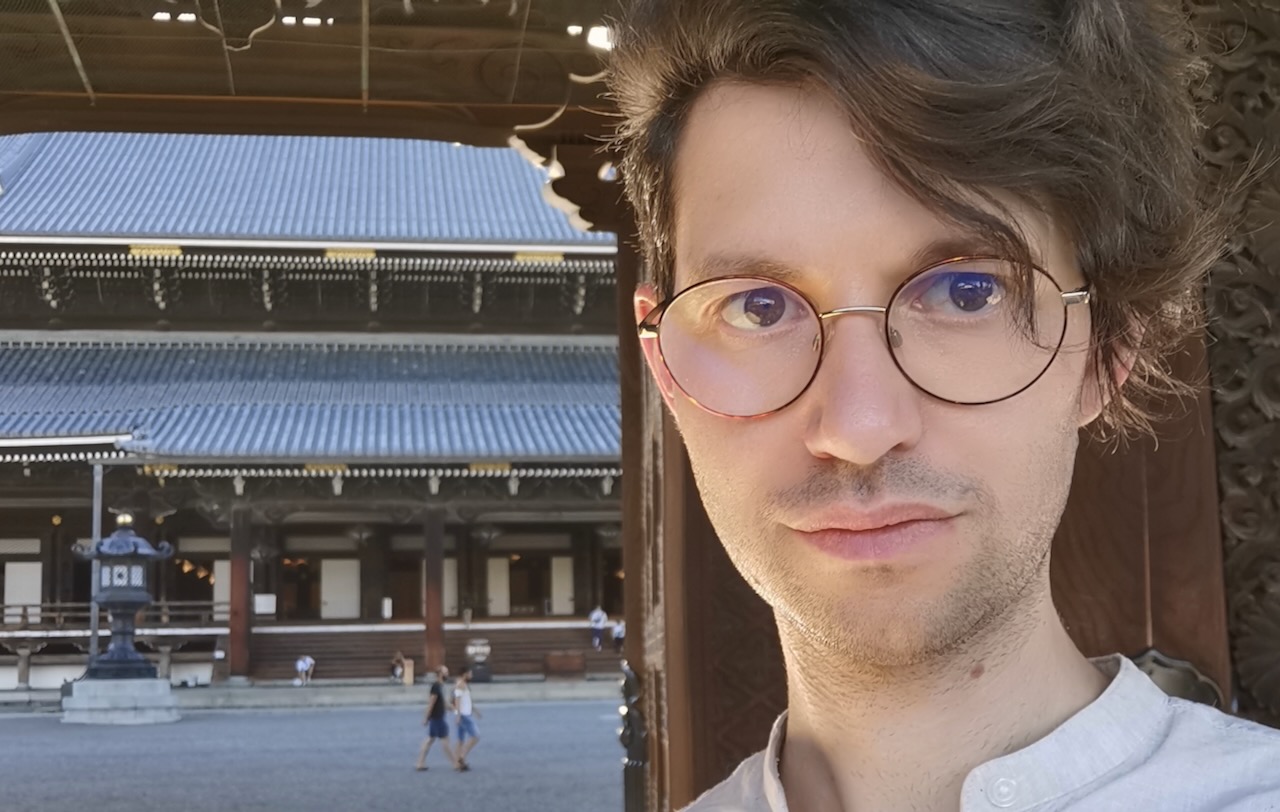
The shūren retreat was not merely training, but a living experience of the Jōdo Shinshū path. I arrived unsure and curious. I left grounded, inspired, and deeply grateful. I look forward to the next retreat with great anticipation.
-Gregory Thomas lives in Salins-les-Bains, France.